


 by
by 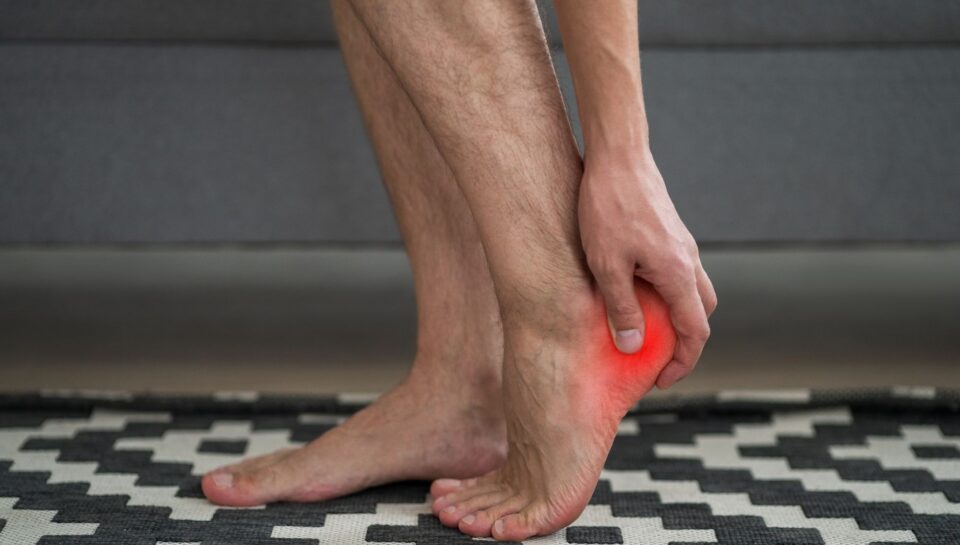
Heel pain is one of the most common foot problems. Many patients who undergo an X-ray are told that they have a heel spur and assume that this small bony growth is the cause of their pain.
In reality, the picture is somewhat more complex.
A heel spur often coexists with plantar fasciitis, an inflammation of the plantar fascia – the strong band of connective tissue that extends from the heel towards the toes. The presence of a heel spur on an X-ray does not necessarily mean that it is the source of the pain. Plantar fasciitis is one of the most common causes of pain on the underside and inner aspect of the heel.
A characteristic symptom is pain during the first few steps in the morning or after a prolonged period of inactivity, which often eases after the patient has been moving for a while.
What is shock wave therapy?
Extracorporeal Shock Wave Therapy (ESWT) is a non-invasive treatment in which a specialised device delivers high-energy acoustic waves to the affected area.
Although the treatment is sometimes informally referred to as “shock wave ultrasound”, the more scientifically accurate term is shock wave therapy.
Shock waves do not work in the same way as conventional therapeutic ultrasound. They create mechanical stimuli within the tissues, with the aim of activating biological mechanisms involved in tissue healing and pain reduction.
Diamagnetic Shock Wave Therapy: the technology we use at PHYSIORAMA
At PHYSIORAMA, we use Diamagnetic Shock Wave Therapy, a modern evolution of focused shock wave treatment.
Unlike conventional shock wave devices, diamagnetic technology provides greater control over the way the shock wave is focused and transmitted through the tissues. This allows therapeutic energy to be delivered to the desired area while providing excellent patient tolerance.
An important advantage of this technology is that treatment is virtually painless for the vast majority of patients, unlike some conventional forms of shock wave therapy, which may cause considerable discomfort during treatment.
Therefore, when treating plantar fasciitis and symptomatic heel spurs, shock wave therapy can be applied without the treatment itself becoming an unpleasant or painful experience for the patient.
Do shock waves eliminate the heel spur?
No. The purpose of treatment is not to “break up” or remove the bony spur.
Treatment primarily targets the tissues surrounding the area, particularly the plantar fascia when chronic symptoms are present.
Therefore, the desired outcome is not necessarily a change in the X-ray appearance, but rather to:
- reduce pain,
- improve the foot’s ability to tolerate loading,
- increase the patient’s ability to walk and exercise,
- and gradually restore normal function.
Is shock wave therapy effective?
Shock wave therapy has been extensively studied in plantar fasciitis, particularly when symptoms persist despite conservative treatment.
Recent systematic reviews suggest that shock wave therapy can provide clinically significant reductions in pain and improvements in function in many patients with plantar fasciitis. A 2024 meta-analysis also found that shock wave therapy produced better outcomes at three months than corticosteroid injections in terms of pain and function.
However, outcomes are not the same for every patient, and there are considerable differences between treatment protocols. Therefore, ESWT should not be regarded as a “miracle cure” or as a stand-alone treatment.
A comprehensive physiotherapy approach
In most cases, the best outcomes are achieved when shock wave therapy forms part of a comprehensive rehabilitation program rather than being used as the sole intervention.
Following a physiotherapy assessment, the program may include:
- stretching of the plantar fascia and calf muscles,
- progressive strengthening of the foot and ankle muscles,
- appropriate management of loading and daily activities,
- footwear assessment and, where appropriate, the use of suitable orthotic devices,
- gradual return to walking, exercise or sport.
Current clinical guidelines for plantar fasciitis place particular emphasis on therapeutic exercise, stretching, and the appropriate management of mechanical loading.
When should shock wave therapy be considered?
Shock wave therapy is generally more appropriate once an accurate diagnosis has been established and pain persists despite initial conservative management.
Not all heel pain is caused by plantar fasciitis. Similar symptoms may arise from other conditions, including problems involving the heel fat pad, nerve irritation or even a stress fracture.
For this reason, before any treatment is selected, a clinical assessment and an individualised rehabilitation plan are essential.
Conclusion
Shock wave therapy can be a useful treatment option for patients with persistent heel pain that is caused by plantar fasciitis.
Its purpose is not to “eliminate” the heel spur, but rather to reduce pain and improve the function of the affected tissues.
At PHYSIORAMA, shock wave therapy is incorporated into an individualized physiotherapy program that combines the appropriate therapeutic intervention with exercise and progressive loading, aiming not only to provide temporary pain relief but also to restore function.
Theodoros Papasavvas, MSc, PhD
Physiotherapist
References
- Koc TA Jr, Bise CG, Neville C, et al. Heel Pain – Plantar Fasciitis: Revision 2023. Journal of Orthopaedic & Sports Physical Therapy. 2023;53(12):CPG1–CPG39.
- Tung WS, Daher M, Covarrubias O, et al. Extracorporeal shock wave therapy shows comparative results with other modalities for the management of plantar fasciitis: A systematic review and meta-analysis. Foot and Ankle Surgery. 2025.
- Cortés-Pérez I, Moreno-Montilla L, Ibáñez-Vera AJ, et al. Efficacy of extracorporeal shockwave therapy, compared to corticosteroid injections, on pain, plantar fascia thickness and foot function in patients with plantar fasciitis: A systematic review and meta-analysis. Clinical Rehabilitation. 2024;38(8):1023–1043.
- National Institute for Health and Care Excellence (NICE). Extracorporeal shockwave therapy for refractory plantar fasciitis. HealthTech Guidance 200.
